
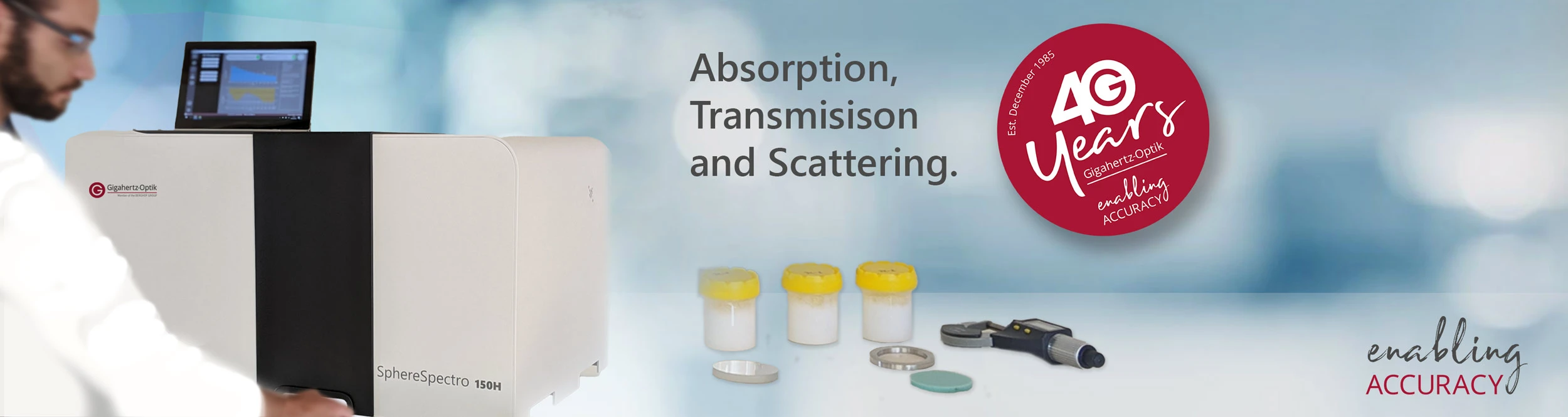
SphereSpectro 150H – A True Highlight in Spectrophotometry
Designed to handle all sample types - diffuse, scattering, and transparent.
Introduction to Spectrophotometry
In general spectrophotometry is a method to measure which substances absorb light by measuring the intensity of light as a beam of light passes through sample. The fundamental principle is that e
Limitations of classical Spectrophotometry
Sampling Time
Usually the spectral range starting in the UV 200 nm to NIR 2500 nm is of interest. Scanning devices based on double monochromators are often used. However, they have limitations due to rather long measurement times in the range of 10 minutes to 20 minutes depending on the wavelength range and sampling interval.
Turbid or Scattering Samples
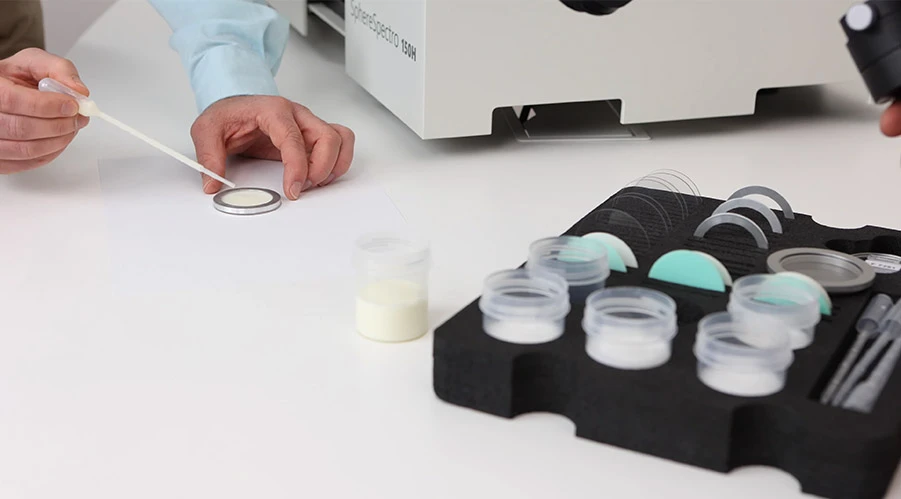
Another limit are so called turbid or scattering samples. Since a part of the light is scattering and not absorbed additional to the spectral absorption coefficient also the spectral scattering coefficient is of interest. The design of a measurement setup that is able to measure both absolutely correct with low uncertaintiy is a challenge.
The Spectrophotometer Solution for all Samples
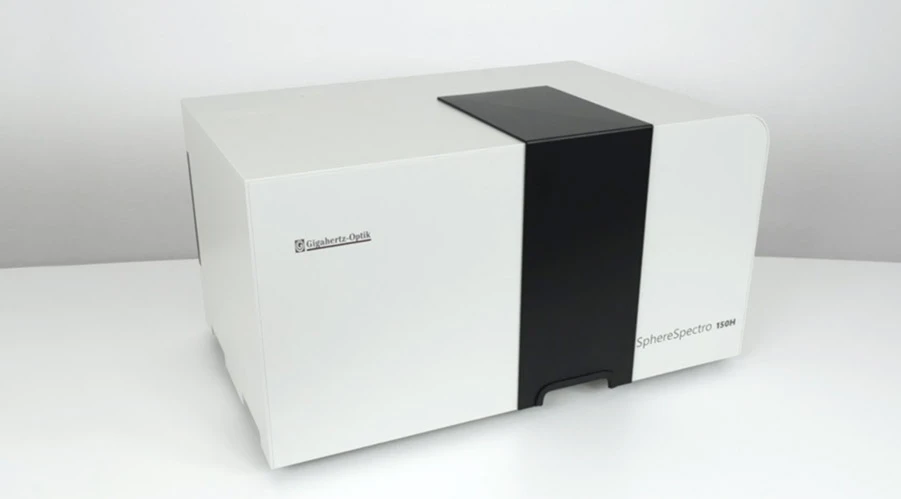
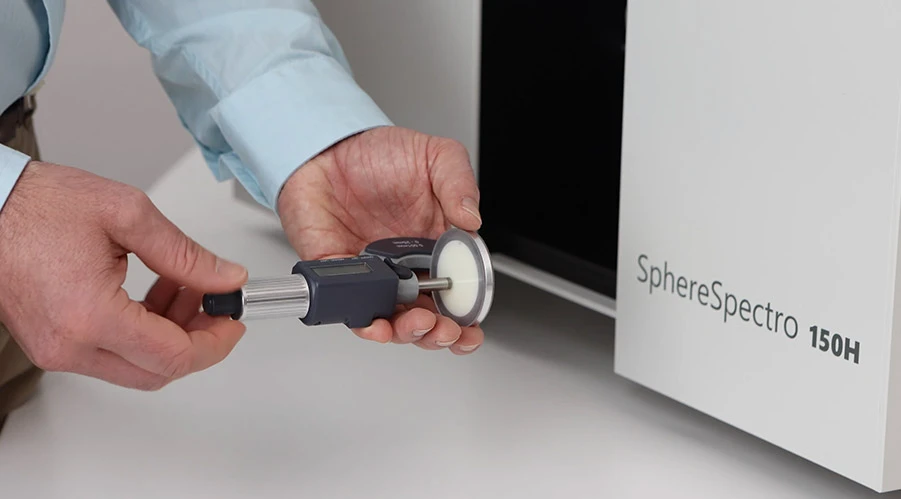
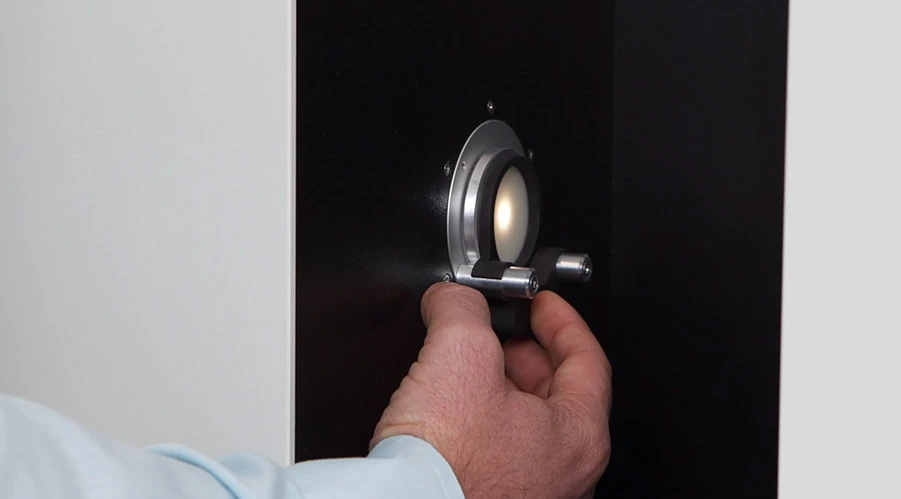
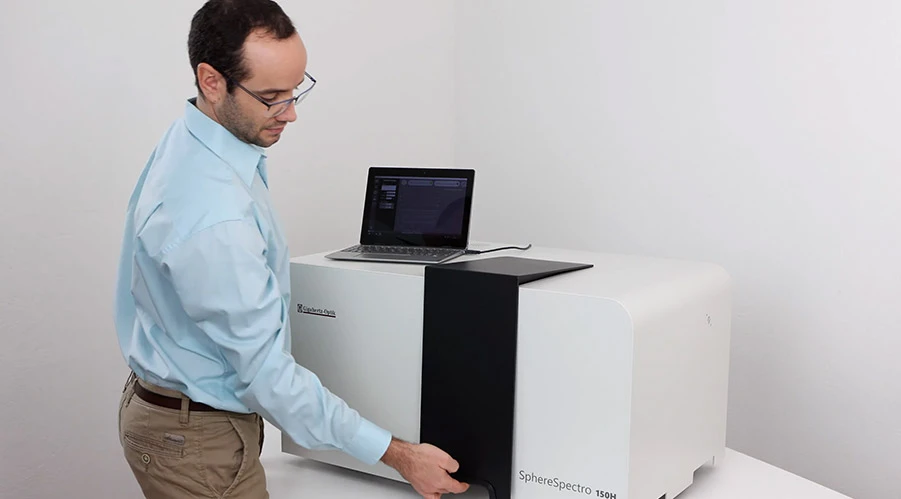
With the SphereSpectro 150 Series we have developed a spectrophotometer that can measure all samples precise and fast. Due to the use of array spectrometers measurement times of a few seconds (VIS and NIR) or in the range of a few minutes (full spectral range) are possible. Furthermore, a patented design and software algorithm allow the precise and accurate measurement of all samples including turbid and diffuse samples. It uses extensive raytracing combined with accuarte modelling.

Spectrophotometer for determining
turbid/diffuse samples:
1. Spectral absorption coefficient
2. Effective scattering coefficient

Supports classical 8°/d geometry
for clear samples:
Absorption and
Transmission measurements
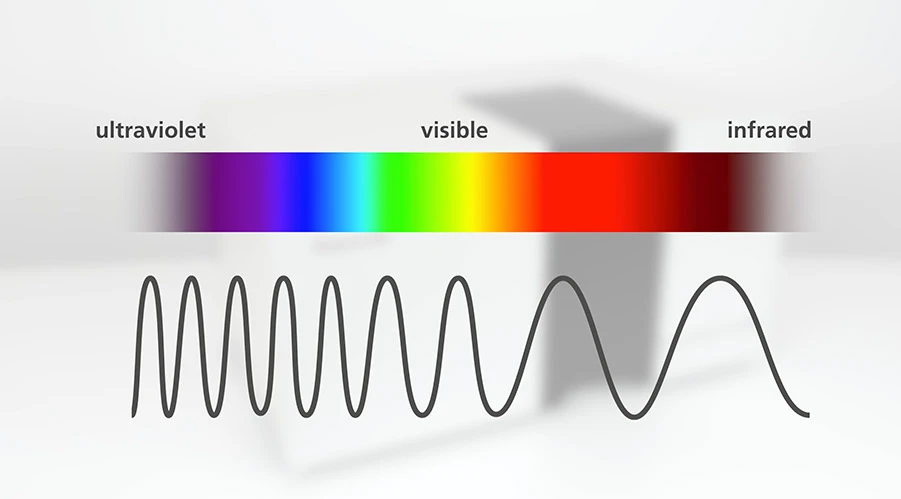

Watch our SphereSpectro 150H Product Video for some quick facts
SphereSpectro 150H Spectrophotometer main Features on a glance
Simultaneous determination of
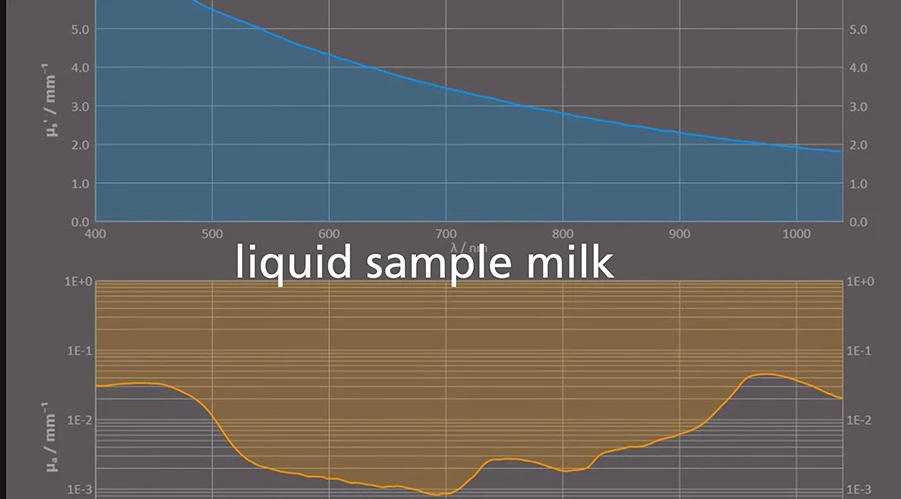
- Absorption coefficient, µa
- effective scattering coefficient, µs‘
Differen Measurement Modes
- Measurement on diffuse samples (solid or liquid)
- Measurement in classical 8°/d measurement geometry for clear probes (according to DIN 5036-3 as well as CIE-130-1998)
- Measurement within seconds
- Precise and absolute measurements
Special Features
- UV, VIS and IR spectral ranges
- Large sample compartment with several probe fixing options
- Plug & play with intuitive software package
- Table top device
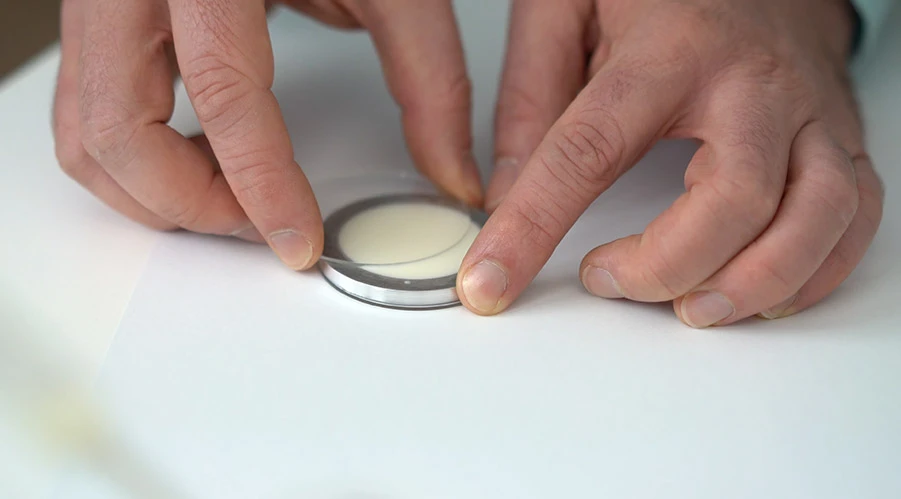
- Easy sample handling
See our further Products:
LCRT-2005H-S
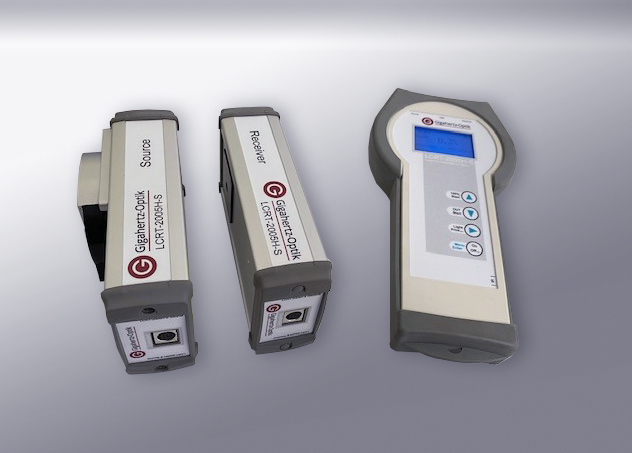
Handheld Light Transmission and Haze Meter for thin and flat Samples
Fast and precise measurements are achieved through the use of a spectral monitor and a luminance detector. The system performs spectral measurement in the range from 380 nm to 780 nm and features automatic ambient light compensation to ensure reliable results. An integrated alignment camera supports accurate sample positioning. The instrument is compliant with CIE 130 and DIN 5036, with haze measurement according to ASTM D1003-13 and simulation of illuminants A, C, and D65.
UPG-150-ART
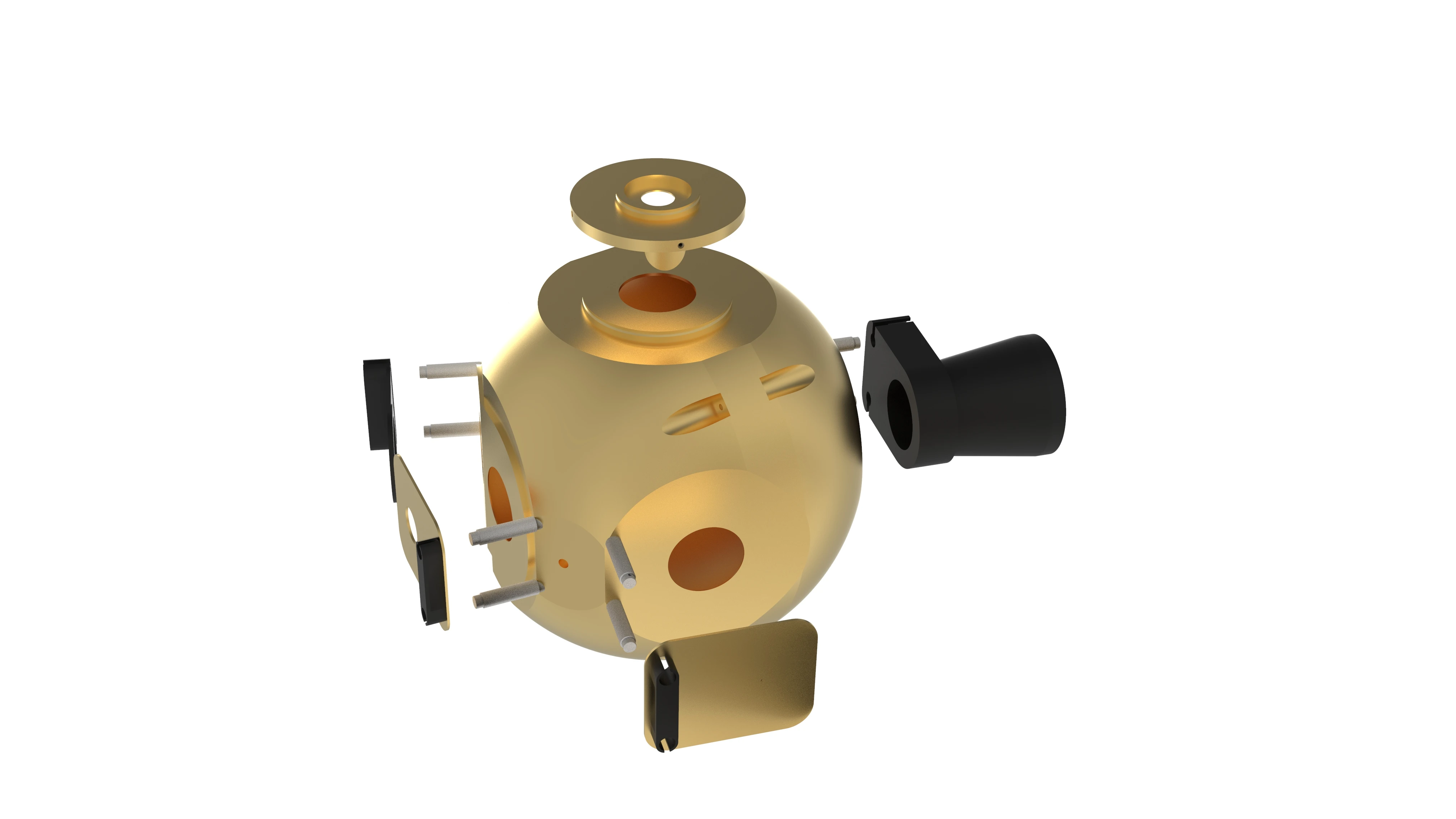
Gold-coated Integrating Sphere for Reflection and Transmission Measurements.
The integrating sphere has a diameter of 150 mm (6 inches) and features five application ports. It is equipped with a diffuse gold coating, and the CNC-machined housing ensures precise port alignment and uniform knife-edges. Optional accessories are available.
UPB-150-ARTA
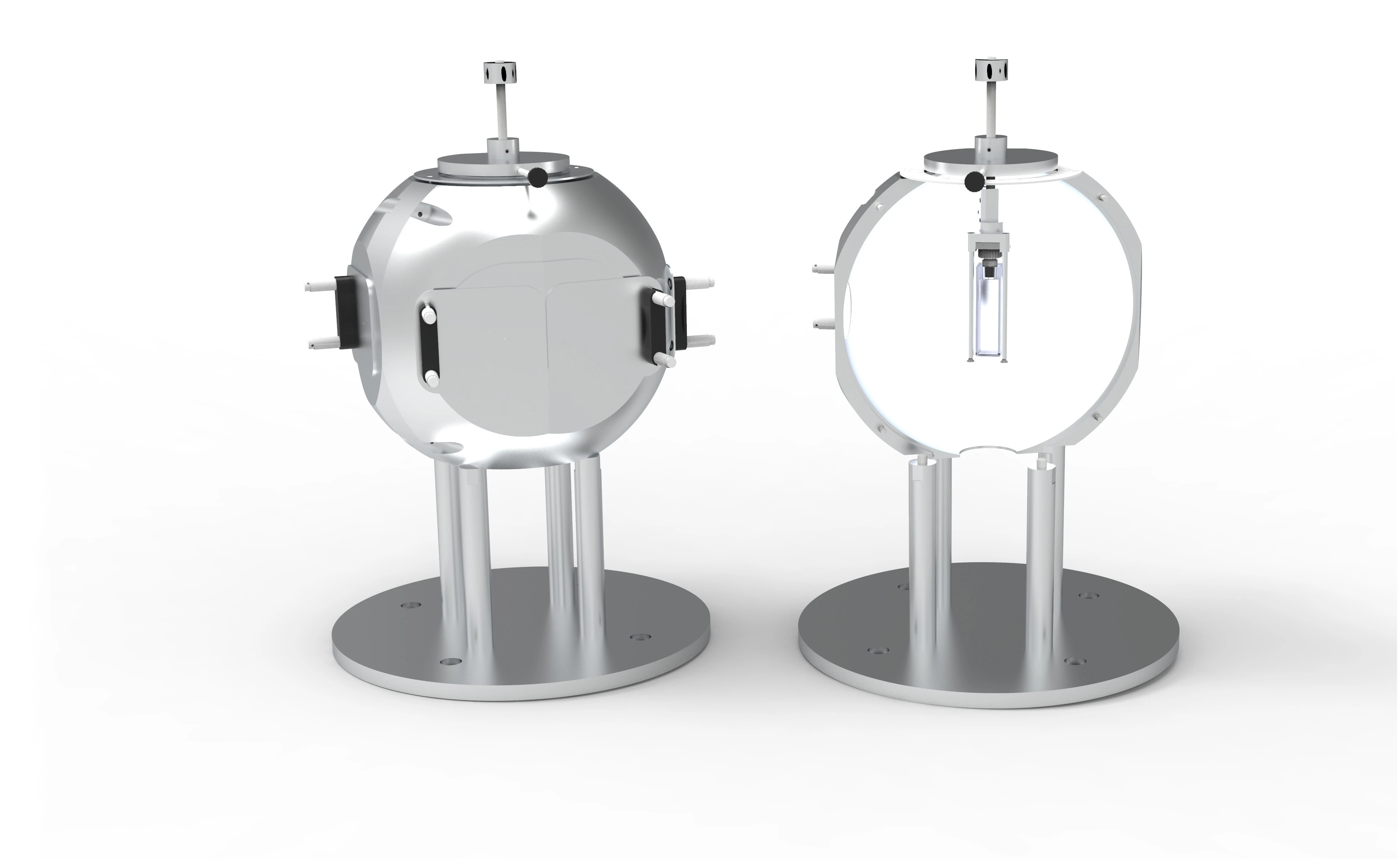
Integrating Sphere for Use in Reflection, Transmission and Absorption Measurements
The integrating sphere has a diameter of 150 mm (6 inches) and features five application ports. It is equipped with a BaSO₄ coating and includes both a sheet and a cuvette sample holder. The CNC-machined housing ensures precise port alignment and uniform knife-edges. Optional accessories are also available.
Reflectance Standards
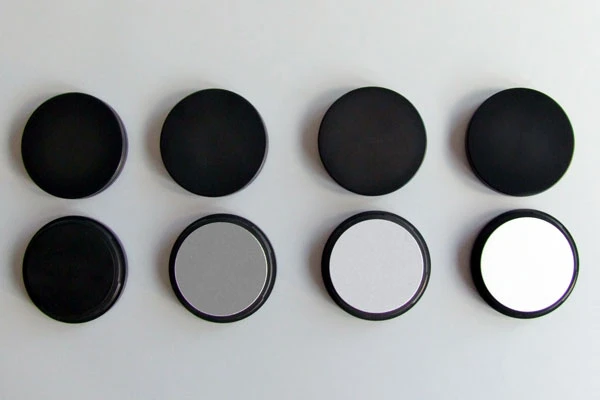
Diffuse reflectance calibration standards
Reflectance standards are diffuse reflectance calibration standards available in white or different grey levels. They provide traceable calibration for the wavelength range from 250 nm to 2450 nm. The standards are made of synthetic material and are available in white with 98% reflectance as well as in grey levels of 2%, 20%, 50%, and 70%.